
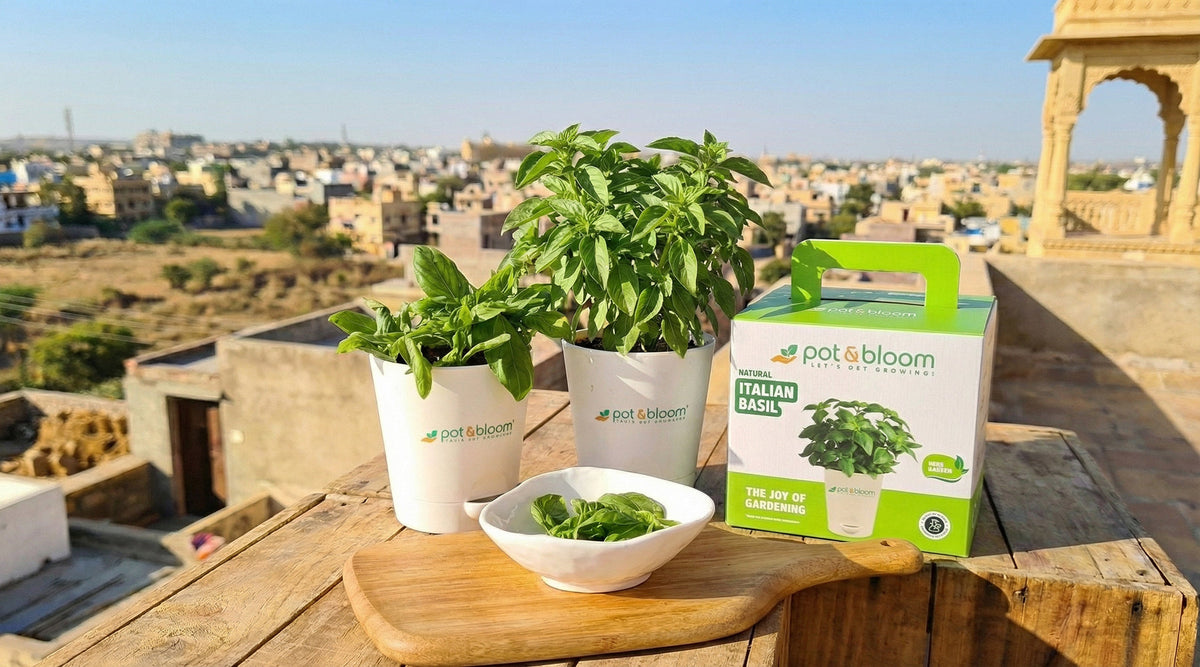
How to Grow Italian Basil at Home: Complete Guide for Indian Climate
Fresh basil from your own garden tastes better than anything from the store. The good news? Growing Italian basil at home in India is easier than you think.
Whether you live in humid Mumbai or dry Delhi, this guide will help you grow healthy, fragrant basil plants. You will learn exactly what your basil needs to thrive in Indian weather. Plus, we will cover common problems and how to fix them fast.
Let us get your basil garden started!
Why Grow Italian Basil at Home?
Italian basil (also called sweet basil) is one of the most rewarding herbs to grow. Here is why home gardeners love it:
Save Money Every Month
A small bunch of fresh basil costs Rs 30-50 at the supermarket. One healthy plant gives you fresh leaves for 4-6 months. That is a lot of savings over time!
With just one plant, you can pick leaves whenever you need them. No more throwing away wilted store-bought basil that you could not use in time.
Enjoy Amazing Flavor
Fresh basil has a sweet, peppery flavor that dried basil cannot match. Your pasta and pizzas will taste restaurant-quality. Once you cook with homegrown basil, you will never go back to dried herbs.
The aroma alone is worth growing basil. Crush a leaf between your fingers and breathe in. That fresh, sweet scent is incredible.
Perfect for Beginners
Basil grows quickly and does not need special care. Seeds sprout in just 5-10 days. You can start harvesting leaves in 6-8 weeks. This quick success helps new gardeners build confidence.
If you have never grown anything before, basil is the perfect first plant. It forgives small mistakes and shows you results fast.
Natural Pest Control
Basil naturally repels mosquitoes and flies. Many Indian homes keep basil plants near windows and doors. The strong scent confuses insects and keeps them away.
Growing basil is like having a natural room freshener that you can eat!
Health Benefits
Basil is not just tasty. It is also good for you. Here are some benefits:
- Helps digestion: Basil tea can calm an upset stomach
- Rich in vitamins: Contains vitamins A, K, and C
- Anti-inflammatory: May help reduce swelling
- Stress relief: The scent is calming and soothing
- Immune support: Antioxidants help keep you healthy

What You Need to Grow Basil
Before planting, gather these supplies. Having everything ready makes the process smooth.
Essential Items
1. Seeds or a Ready Kit
Italian basil seeds are widely available. Look for varieties labelled "sweet basil" or "Genovese basil." These are the classic Italian varieties.
Want the easiest start? The Italian Basil Kit from Pot and Bloom includes everything you need. You get premium seeds, organic potting mix, a pot, and care instructions. Just add water and sunlight!
For more variety, try the Treasures Basil Kit. It includes multiple basil varieties plus nutrition and protection sprays. Perfect for the herb lover who wants options.
2. A Good Container
Any pot with drainage holes works. Start with a pot at least 6 inches wide and 6 inches deep. Bigger pots hold more soil and water, which helps in Indian summers.
Make sure your pot has holes at the bottom. Basil hates sitting in water. Without drainage, roots will rot.
3. Quality Potting Mix
Regular garden soil is too heavy for pots. It packs down and chokes roots. Use a light mix made for containers.
The Pot Mix from Pot and Bloom is perfect for basil. It contains red soil, vermi-compost, coco peat, and nutrients. This mix drains well but holds enough moisture. Everything basil needs for strong root growth is already in there.
4. A Sunny Spot
Basil loves light. Find a place that gets 4-6 hours of direct morning sunlight. East-facing balconies and windows work great.
5. A Watering Can
A gentle spray or thin spout is best. You want to water without disturbing seeds or washing away soil.
Helpful Extras
- Small stones for pot drainage
- A spray bottle for misting seedlings
- Organic fertilizer for feeding later
- Labels to mark planting dates
Best Seasons to Grow Basil in India
Timing matters a lot in Indian weather. Plant at the right time, and basil thrives. Plant at the wrong time, and you will struggle.
Best Time: Post-Monsoon (September to November)
This is the golden season for basil in India. The weather is mild, the humidity is moderate, and the sunlight is perfect. Plants grow fast and produce lots of leaves.
If you can only plant once a year, choose this time.
Good Time: Late Winter/Spring (February to April)
February and March are also excellent for starting basil. Days are getting longer and warmer. Plants have time to establish before summer heat arrives.
Start seeds indoors in late January if you want a head start.
Challenging: Peak Summer (May to June)
Extreme heat stresses basil plants. Temperatures above 35 degrees Celsius make plants bolt (flower too early). This ruins the leaf flavor.
If you must grow in summer:
- Provide afternoon shade
- Water twice daily
- Use larger pots to hold more moisture
- Mulch the soil surface
Difficult: Peak Monsoon (July to August)
Heavy rain and humidity cause fungal problems. Over watering is almost guaranteed. Root rot becomes common.
If growing during the monsoon:
- Move pots under a covered area
- Improve air circulation
- Check for fungal spots daily
- Reduce watering significantly
Winter Advice by Region
North India (Delhi, Punjab, UP): Basil struggles below 15 degrees Celsius. Bring pots indoors on cold nights. Cover plants with cloth if needed.
South India (Bangalore, Chennai, Hyderabad): Mild winters mean year-round growing is possible. Just protect from unexpected cold snaps.
Step-by-Step: Planting Your Basil Seeds
Follow these simple steps for successful germination:
Step 1: Prepare Your Container
Fill your pot with potting mix, leaving about 1 inch of space at the top. Press down gently to remove air pockets. The soil should feel firm but not packed tight.
Water the soil until it is evenly moist. Let it drain for 5 minutes before planting. The soil should be damp like a squeezed sponge, not soaking wet.
Step 2: Plant the Seeds
Scatter 6-8 seeds on top of the soil. Space them about 1 inch apart if possible. More seeds give you backup if some do not sprout.
Cover seeds with a very thin layer of soil. No more than 1/4 inch deep. Basil seeds need some light to germinate, so do not bury them too deeply.
Gently press the soil to ensure good contact between seeds and soil. This helps seeds absorb water.
Step 3: Create a Mini Greenhouse
Cover the pot loosely with clear plastic wrap or a plastic bag. This keeps humidity high and helps seeds sprout faster.
Place the pot in a warm spot. 25-30 degrees Celsius is ideal. Keep it away from direct sunlight until the seeds sprout. Too much heat can dry out the soil before seeds have a chance.
A warm kitchen counter or near a window (but not in direct sun) works well.
Step 4: Wait and Watch
Check daily. Mist the soil if it feels dry on top. Never let it dry out completely, but do not soak it either.
Basil seeds usually sprout in 5-10 days. You will see tiny green shoots pushing through the soil. This is exciting!
Step 5: Remove the Cover
Once you see green sprouts, remove the plastic cover. Move the pot to a sunny spot that gets morning light.
Start with gentle morning sun. Direct afternoon sun can be too harsh for baby seedlings.
Step 6: Thin Your Seedlings
When seedlings have 4 true leaves (about 2 weeks after sprouting), thin them out. Keep the 3-4 strongest seedlings. Remove weak or crowded ones.
This gives the remaining plants room to grow bushy and strong. It feels wasteful, but crowded plants grow poorly.
Caring for Your Basil Plants
Healthy basil needs three things: proper sunlight, correct watering, and good nutrition.
Sunlight Requirements
How much light does basil need?
Basil loves sunlight. Give your plants:
- Minimum: 4 hours of direct sunlight daily
- Ideal: 6-8 hours of morning sunlight
- Best time: Morning sun (6 AM to 12 PM)
Why morning sun?
Afternoon sun in India can be harsh, especially in summer. Morning light is gentle and gives basil the energy it needs without burning the leaves.
Indoor growing tip: Place pots near east-facing windows. If natural light is limited, basil can grow under bright artificial lights for 10-12 hours daily.
Signs your basil needs more light:
- Pale green or yellow leaves
- Long, weak stems reaching toward light
- Small leaves
- Slow growth
- Floppy, leggy appearance
Signs of too much harsh sun:
- Brown, crispy leaf edges
- Wilting during the afternoon (even with moist soil)
- Bleached or white patches on leaves
- Curling leaves
Watering Your Basil
Watering is where most new gardeners make mistakes. Here is how to get it right:
The simple rule: Water when the top inch of soil feels dry. Stick your finger in the soil to check. If it feels dry up to your first knuckle, water. If still moist, wait another day.
How to water correctly:
- Water slowly at the base of the plant
- Avoid wetting the leaves (wet leaves invite disease)
- Keep watering until water drains from the bottom
- Empty the saucer after 30 minutes to prevent root rot
How often to water (general guide):
- Summer: Every 1-2 days
- Monsoon: Every 2-4 days (check soil first!)
- Winter: Every 3-5 days
- Post-monsoon: Every 2-3 days
Morning is best. Water your basil early in the day. This gives leaves time to dry before evening. Wet leaves at night invite fungal diseases.
Avoid over watering. Basil hates wet feet! Soggy soil causes root rot - the number one killer of potted basil.
Signs of over watering:
- Yellow lower leaves
- Drooping despite wet soil
- Mushy stems near the base
- Bad smell from the soil
- Mold on the soil surface
Signs of under watering:
- Wilting leaves that perk up after watering
- Dry, crispy leaf edges
- Soil pulling away from pot edges
- Light-colored, dry soil
Feeding Your Basil
Basil is a moderate feeder. Too much fertilizer makes leaves bitter. Too little makes growth slow. Balance is key.
When to start feeding:
Wait until seedlings have 4-5 true leaves. That is about 3-4 weeks after sprouting. Feeding too early can burn young roots.
What to use:
Organic fertilizers work best for herbs you will eat. Chemical fertilizers can make basil taste bitter and are not food-safe.
The Vermi-compost from Pot and Bloom is a natural fertilizer made from organic waste and earthworms. It feeds plants gently without burning roots. Plus, it improves soil structure over time.
How to apply vermi-compost:
- Sprinkle 1-2 tablespoons around the base of each plant
- Gently mix into the top layer of soil
- Water thoroughly after applying
How often to feed:
- Add vermicompost every 3-4 weeks
- During the active growth season, feed every 2-3 weeks
- Reduce feeding in winter when growth slows
Foliar feeding for quick results:
Spraying nutrients directly on leaves gives fast results. Plants absorb nutrients through leaves quickly.
The Nutrition Spray provides vitamins and minerals that plants absorb fast. Use it every 15-20 days during the growing season for lush, green leaves.
The Pinching Secret: How to Get Bushy Plants
Here is a secret most new gardeners do not know: harvesting basil correctly makes your plant grow MORE, not less.
Why Pinching Matters
When you pinch off leaves the right way, your plant grows bushier. One stem becomes two. Two become four. Soon, you will have a full, productive plant covered in leaves.
Without pinching, basil grows tall and lanky. It flowers quickly and stops making tasty leaves. The plant looks leggy and weak.
When to Start Pinching
Begin when your plant has 3 sets of true leaves. That is about 6-8 inches tall. Never pinch tiny seedlings. Let them establish first.
How to Pinch Basil (Step by Step)
- Find a stem tip - Look at the top of any stem
- Locate a leaf pair - See where two leaves grow opposite each other
- Pinch just above - Use your fingers or clean scissors to cut just above that leaf pair
- Watch the magic - Two new stems will grow from that spot
The Technique Explained
Every time you pinch off the tip, the plant sends out two new branches from that spot. This doubles your potential harvest with each pinch!
Repeat every 2-3 weeks on all stems. Your plant will become round and bushy instead of tall and skinny.
Stopping Flowers
Basil wants to flower and make seeds. That is its natural goal. But once it flowers, leaf production stops and flavour becomes bitter.
When you see flower buds forming:
- Pinch them off immediately
- Do not let any flowers open
- Check daily during warm weather
This keeps your plant focused on making delicious leaves.
Harvesting Without Killing Your Plant
Harvest correctly, and your plant keeps giving. Harvest wrong, and it dies. Here is how to do it right.
Best Time to Harvest
Time of day: Morning, after dew dries but before afternoon heat. This is when oils are strongest, and flavour is best.
Plant readiness: Wait until plants are at least 6-8 inches tall with several sets of leaves. Harvesting too early weakens young plants.
How Much to Take
Golden rule: Never remove more than one-third of the plant at once. Taking more stresses the plant and slows regrowth.
If you need a lot of basil, harvest from multiple plants. Or wait a week between harvests.
What to Harvest
Always take from the top of stems, not the bottom. This encourages bushier growth.
For a few leaves: Pick individual leaves from the stem tips.
For cooking: Cut whole stems, 4-6 inches long, just above a leaf pair.
Never strip the bottom leaves: These are the plant's solar panels. It needs them to make energy.
Storing Fresh Basil
Short term (1 week):
Place stems in a glass of water like flowers. Keep at room temperature, not in the fridge. Cold damages basil leaves and turns them black.
Medium term (2-3 weeks):
Wrap leaves loosely in damp paper towels. Store in a plastic bag in the refrigerator's warmest spot (usually the door).
Long term:
- Freeze leaves in ice cube trays with water or olive oil
- Make basil paste and freeze in portions
- Dry leaves (though the flavour reduces significantly)
- Make pesto and freeze in small containers
Common Problems and How to Fix Them
Even experienced gardeners face challenges. Here are the most common issues and solutions:
Yellow Leaves
Yellow leaves are the number one concern for basil growers. Here are the causes:
Over watering (most common)
- Lower leaves turn yellow first
- Soil feels wet or soggy
- Solution: Let the soil dry out. Water less often. Check drainage.
Nutrient deficiency
- The whole plant looks pale
- Growth is slow
- Solution: Add Vermicompost or spray with Nutrition Spray.
Not enough light
- Leaves are pale green, almost yellow
- Stems are weak and stretched
- Solution: Move to a sunnier spot.
Natural aging
- Only the oldest bottom leaves turn yellow
- The rest of the plant looks healthy
- Solution: Remove yellow leaves. This is normal.
Leggy, Weak Growth
What it looks like: Tall, thin stems. Small leaves. The plant looks stretched and floppy.
Causes:
- Not enough light (most common)
- Too much nitrogen fertilizer
- Not pinching stems
Solutions:
- Move to a brighter location
- Reduce fertilizer strength
- Start pinching to encourage branching
- If very leggy, cut back hard and let new growth come
Brown Leaf Edges
Causes:
- Under watering
- Too much direct afternoon sun
- Salt buildup in soil from tap water
- Low humidity
Solutions:
- Water more frequently
- Provide afternoon shade
- Flush soil with plain water monthly
- Mist leaves in dry weather
Wilting
Dry soil wilting:
- The soil is dry
- Leaves droop and look lifeless
- Solution: Water immediately. The plant usually recovers in hours.
Wet soil wilting (root rot):
- Soil is wet, but the plant still droops
- Roots may be brown and mushy
- Solution: Stop watering. Improve drainage. May need to repot in fresh soil.
Heat stress:
- Afternoon wilting even with moist soil
- Recovers by evening
- Solution: Provide afternoon shade. Move to a cooler spot.
Holes in Leaves
Insects are eating your basil! Common culprits:
Slugs: Large, irregular holes, slime trails visible at night.
Caterpillars: Missing leaf sections, look for green worms.
Grasshoppers: Jagged edges, visible jumping insects.
Aphids: Tiny green bugs under leaves, sticky residue.
Solutions:
- Check under leaves for pests
- Handpick visible insects
- Wash off aphids with a strong water spray
- Use organic pest control
The Aphids Buster works well for soft-bodied insects like aphids, whiteflies, and mealybugs. Spray under leaves where pests hide.
White Powdery Coating
What it is: Powdery mildew - a fungal disease common in humid weather.
What it looks like: White or grey powder on leaves, like someone dusted them with flour.
Solutions:
- Remove affected leaves immediately
- Improve air circulation around plants
- Water at the soil level, never on leaves
- Space plants further apart
- Use the Protection Spray preventively during the monsoon
Basil Turning Bitter
Causes:
- Plant is flowering (most common)
- Too much fertiliser
- Water stress
- Harvesting old leaves
Solutions:
- Pinch off flower buds as soon as they appear
- Use half-strength fertiliser
- Keep watering consistently
- Only harvest young leaves from the stem tips
Delicious Ways to Use Fresh Basil
Now for the best part - eating your homegrown basil! Here are recipes and ideas:
Classic Basil Pesto
This Italian sauce is the most famous basil recipe. Use it on pasta, bread, grilled vegetables, or pizza.
Ingredients:
- 2 cups packed fresh basil leaves
- 1/3 cup pine nuts or cashews (toast lightly for better flavour)
- 2-3 cloves garlic
- 1/2 cup good olive oil
- 1/2 cup grated Parmesan cheese
- Salt and pepper to taste
Method:
- Blend basil, nuts, and garlic until roughly chopped
- Slowly add oil while blending until smooth
- Stir in cheese by hand (blending makes it gummy)
- Season with salt and pepper
- Store in fridge with oil layer on top (lasts 1 week)
Indian twist: Replace pine nuts with roasted peanuts. Add a green chilli for heat.
Caprese Salad
The simplest way to showcase fresh basil. Three ingredients, incredible flavour.
Ingredients:
- Fresh ripe tomatoes, sliced
- Fresh mozzarella, sliced
- Fresh basil leaves (lots!)
- Good olive oil
- Salt and pepper
Method:
- Arrange alternate slices of tomato and mozzarella on a plate
- Tuck whole basil leaves between slices
- Drizzle generously with olive oil
- Sprinkle with salt and pepper
- Serve immediately
Basil Iced Tea
Refreshing drink for Indian summers. The basil adds a unique, cooling flavour.
Ingredients:
- 10-12 fresh basil leaves
- 2 cups hot water
- 2 tablespoons honey (adjust to taste)
- Juice of 1 lemon
- Ice cubes
Method:
- Muddle (crush gently) basil leaves in a pitcher
- Pour hot water over leaves
- Steep for 5 minutes
- Strain out leaves
- Add honey and lemon, stir well
- Cool to room temperature
- Serve over ice
Thai-Style Basil Rice
Quick weeknight dinner with amazing flavour. Ready in 15 minutes.
Ingredients:
- 3 cups cooked rice (day-old works best)
- Large handful of fresh basil leaves
- 4 cloves garlic, minced
- 2-3 green chillies, sliced
- 2 tablespoons soy sauce
- 1 tablespoon oil
Method:
- Heat oil in a wok or large pan over high heat
- Add garlic and chillies, stir for 30 seconds
- Add rice, toss to coat with oil
- Add soy sauce, toss again
- Turn off the heat, add basil leaves
- Toss until basil just wilts
- Serve immediately
Tomato Basil Soup
Comfort food at its best. The basil makes it special.
Ingredients:
- 4 large ripe tomatoes, chopped
- 1 onion, chopped
- 3 cloves of garlic
- Handful of fresh basil
- Salt, pepper
- Cream (optional)
Method:
- Saute onion and garlic until soft
- Add tomatoes, cook until they break down (15 minutes)
- Blend until smooth
- Return to the pot, add fresh basil
- Simmer 5 minutes
- Add cream if desired
- Serve with crusty bread
Quick Ideas for Fresh Basil
- Pizza: Add torn basil AFTER baking, not before
- Pasta: Toss with pasta just before serving
- Drinks: Float leaves on lemonade or cocktails
- Eggs: Add to scrambled eggs or omelettes
- Sandwiches: Layer fresh leaves like lettuce
- Salads: Tear and add to any green salad
- Bruschetta: Top toasted bread with tomato-basil mix
- Smoothies: Blend into green smoothies
Frequently Asked Questions
How long does basil take to grow from seed?
Seeds sprout in 5-10 days. You can start light harvesting at 4-6 weeks. Full harvests begin at 6-8 weeks when plants are bushy and established.
Can I grow basil indoors in India?
Yes! Place near a sunny window that gets at least 4 hours of direct light. East-facing windows work best. Rotate the pot weekly so all sides get light and the plant grows evenly.
Why does my basil taste bitter?
Bitter taste usually means the plant is flowering. Pinch off any flower buds immediately. Only harvest young leaves from the stem tips for the best flavour. Also, reduce fertiliser if you have been feeding heavily.
How long does a basil plant live?
Italian basil is an annual plant. It completes its life cycle in one season. With good care and regular harvesting, plants can produce for 4-6 months before flowering and dying. Start new plants every few months for a continuous supply.
Can I grow basil from store-bought basil?
Yes! Take 4-inch stem cuttings from fresh store-bought basil. Remove lower leaves. Place stems in water. Roots develop in 1-2 weeks. Then plant in the soil. However, starting from seeds gives stronger, healthier plants.
What grows well with basil?
Basil makes a great companion for tomatoes, peppers, and beans. It may help repel pests from these plants. The classic garden pairing is basil and tomatoes - they grow well together and taste great together too!
Avoid planting near sage or mint. These compete with basil and may affect its growth.
Is Indian holy basil (tulsi) the same as Italian basil?
No. Holy basil (Ocimum tenuiflorum) and Italian basil (Ocimum basilicum) are different plants. They have different flavours, appearances, and uses. Tulsi has a stronger, more peppery flavour and is used mainly for tea and religious purposes. Italian basil has a sweeter flavour and is used for cooking pasta, pizza, and pesto.
This guide focuses on Italian/sweet basil for cooking.
Why is my basil not growing?
Common reasons for slow growth:
- Too little light: Move to a sunnier spot
- Cold temperatures: Basil needs warmth (20-30 degrees C)
- Poor soil: Add compost or use quality potting mix
- Overwatering: Let the soil dry between waterings
- Not enough nutrients: Feed with vermicompost
Can I grow basil year-round in India?
In South India (Bangalore, Chennai, Hyderabad), yes. Mild winters allow year-round growth with basic care.
In North India (Delhi, Punjab), basil struggles in winter. Bring pots indoors when temperatures drop below 15 degrees Celsius. Or treat basil as a seasonal crop from February to November.
Start Your Basil Garden Today
Growing Italian basil at home is one of the most satisfying things you can do. In just a few weeks, you will be picking fresh, fragrant leaves for your kitchen.
The key is starting with good materials. Quality seeds, proper potting mix, and the right nutrients make all the difference. The Italian Basil Kit gives you everything needed for success in one convenient package.
Remember these three golden rules:
- Morning sunlight is your friend - 4-6 hours of gentle morning sun
- Let the soil dry slightly between waterings - Check before you water
- Pinch the tops regularly - This is the secret to bushy plants
Once you taste that first homemade pesto with your own basil, you will understand why gardeners love this herb so much. There is nothing like fresh basil picked minutes before cooking.
Start today. Your first harvest is just weeks away!

Leave a comment
This site is protected by hCaptcha and the hCaptcha Privacy Policy and Terms of Service apply.