


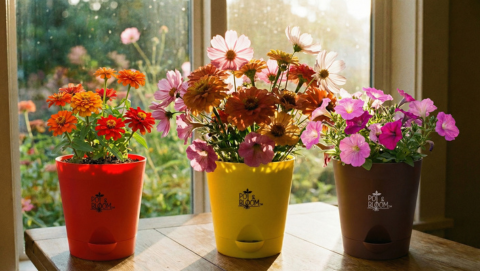
Want to fill your home with beautiful flowers? You do not need a green thumb. You just need the right plants to start with.
Zinnia, cosmos, and petunia are three of the easiest flowers you can grow. They forgive mistakes. They bloom for months. And they make your garden look amazing.
This guide will teach you everything about growing these three flowers. You will learn when to plant them. How to care for them. And how to cut them for vases. By the end, you will feel ready to start your flower garden today.
Why These Are the Best Flowers for Beginners in India
If you are looking for easy flowers to grow at home, these three should be at the top of your list.
Zinnia, cosmos, and petunia are ideal for beginners because they:
- Germinate easily from seeds
- Adapt well to the Indian climate
- Grow well as balcony flower plants
- Bloom within 6 to 8 weeks
- Recover quickly from small care mistakes
- Flowers repeatedly with simple maintenance
They are perfect for people who want to grow flowers in pots at home without complex routines or expensive equipment.
Another reason these flowers are beginner-friendly is that they clearly show what they need. Droopy leaves tell you they need water. Fewer flowers usually mean they need more sunlight or feeding. This makes learning intuitive, even for first-time gardeners.
Understanding the Growth Habit of Each Flower
Knowing how a plant grows helps you avoid problems later.
Zinnia: Upright and Structured
Zinnia grows straight and tall. It forms a central stem with side branches after pinching. This makes it perfect for adding height to a balcony garden. It works well in individual pots placed at the back or corners.
Cosmos: Light and Flowing
Cosmos has thin stems and feathery leaves. It sways easily in the wind and creates movement. It looks best when planted where it has space to grow without crowding.
Petunia: Spreading and Full
Petunia grows outward and downward. It fills space, spills over edges, and softens sharp lines. It is ideal for hanging baskets, railing planters, and wide pots.
Together, these three plants create visual balance. Height, softness, and fullness all in one setup.
Best Time to Grow Zinnia, Cosmos and Petunia in India
Ideal Growing Season
The best time to grow these flowering plants is from October to February across most of India.
During this period:
- Temperatures stay between 15–28°C
- Root growth is steady
- Flower buds do not drop due to heat stress
- Water evaporates slowly, reducing watering errors
- Pest activity is lower
This season gives the highest success rate, especially for beginners.
Can You Grow Them Year-Round?
Yes, but with adjustments.
- Zinnia and cosmos tolerate heat better and can grow into early summer if protected from harsh afternoon sun.
- Petunia prefers cooler weather and struggles when temperatures stay above 30°C.
- Avoid sowing seeds during April and May unless you have shade, airflow, and watering control.
In very hot regions, morning sun plus afternoon shade can extend the growing season.
Understanding Your Balcony or Terrace Microclimate
Every balcony behaves differently.
Sun Patterns
Track where sunlight falls during the day. Some balconies get intense noon sun. Others get only morning or evening light. This affects plant placement.
Wind Exposure
High-rise balconies face strong winds. Cosmos tolerates wind well. Zinnia may need support. Petunia dries faster and needs more frequent watering.
Rain Exposure
During the monsoon, uncovered balconies get waterlogged. Ensure pots drain well and reduce watering manually.
Understanding your microclimate helps prevent failure more than any fertiliser.
Choosing the Right Location at Home
Sunlight Requirements
- Zinnia and cosmos need 6–8 hours of direct sunlight
- Petunia grows best with 4–6 hours of sunlight
- Morning sunlight is ideal
If your space gets uneven light, place zinnia and cosmos in the brightest spot and petunia slightly away from the harsh afternoon sun.
Airflow and Spacing
Good airflow prevents fungal problems. Space pots so leaves do not constantly touch. Avoid placing pots tightly against walls where air movement is poor.
What You Need to Grow Flowers in Pots at Home
Pots and Containers
- Use 6–8-inch pots for single plants
- Hanging or railing planters work best for petunias
- Always ensure drainage holes at the bottom
Roots sitting in water is one of the most common reasons flowering plants fail.
Potting Mix
Healthy flowering starts with soil.
Use Pot Mix from Pot and Bloom, a light, well-draining mix that supports strong roots and steady flowering. It prevents compaction, drains excess water, and holds nutrients evenly.
Avoid using plain garden soil alone, as it becomes hard in pots and restricts root growth.
Feeding Schedule for Healthy Growth and More Flowers
Flowering plants need different nutrients at different stages.
Early Growth Stage
- Vermicompost supports leaf and stem development
- Mix lightly into the topsoil every 2 weeks
- Avoid overfeeding at this stage
Active Growth Stage
- Natural Nutrition Spray provides quick nutrients through leaves
- Foliar feeding works faster
- Strengthens plants before bud formation
Bud and Flowering Stage
- Flower Booster Spray increases bud formation and bloom longevity
- Increases the number of buds
- Improves colour intensity
- Extends bloom life
Pest Prevention
- Natural Protection Spray keeps aphids, mites, and whiteflies away naturally
- Use preventively once every 7–10 days
Growing Zinnia at Home

Zinnia is one of the easiest flowering plants for beginners in India.
Zinnia Plant Care Basics
- Loves full sun
- Needs moderate watering
- Blooms repeatedly when deadheaded
- Handles heat better than many flowers
Zinnia Grow Kit by Pot and Bloom
The Zinnia Grow Kit includes seeds, growing medium, nutrients, and clear instructions, making it ideal for first-time gardeners.
How to Plant Zinnia Seeds
- Fill the pot with potting mix
- Sow seeds 1 cm deep
- Space seeds 10–12 cm apart
- Water gently
- Place in full sun
Seeds germinate in 5–7 days.
Watering Zinnia Correctly
Water when the topsoil feels dry. Overwatering causes weak stems and fewer flowers. Always water at the base, not on leaves.
Pinching, Deadheading and Flowering
Pinch the top when the plant reaches 15 cm. Remove faded flowers regularly. Use Flower Booster Spray every 15 days once buds appear.
Cutting Zinnia for Vases
Cut early morning above a leaf joint. Zinnias last long in water when stems are firm and water is changed daily.
Growing Cosmos at Home

Cosmos are among the most forgiving flowering plants for balcony gardens.
Cosmos Flower Growing Guide
- Thrives in full sun
- Needs minimal fertiliser
- Blooms continuously once established
- Handles poor soil better than most flowers
Cosmos Grow Kit by Pot and Bloom
The Cosmos Grow Kit is ideal for effortless, airy flowers.
Sowing and Care
Seeds germinate in 7–10 days. Water lightly but regularly. Feed sparingly. Too much fertiliser leads to leafy plants with fewer flowers.
Use Flower Booster Spray every 20 days during flowering.
Supporting Tall Cosmos Plants
Some varieties grow tall and may lean. Use thin bamboo sticks or garden twine for light support.
Cutting Cosmos for Vases
Cut when buds are just opening. Long stems and fresh cuts improve vase life.
Growing Petunia at Home

Petunia is a classic choice for balcony flower plants.
Petunia Plant Care in India
Petunias bloom heavily and need regular feeding and pruning. They reward attention with constant flowers.
Petunia Grow Kit by Pot and Bloom
The Petunia Grow Kit is designed for tiny seeds and long bloom cycles, making it ideal for home gardeners.
Daily Care and Pruning
- Keep soil lightly moist
- Avoid waterlogging
- Prune leggy growth by one-third regularly
- Use Flower Booster Spray every 10–15 days once buds appear
Pruning is essential. Without it, petunias become weak and stop flowering.
How Long Do These Flowers Bloom?
With proper care:
- Zinnia blooms for 2–3 months
- Cosmos blooms for 2 months or more
- Petunia blooms continuously with pruning
Regular feeding and deadheading extend bloom time significantly.
Deadheading Explained: Why Removing Old Flowers Matters
Deadheading is one of the most important habits for flowering plants.
When flowers fade, plants shift energy into making seeds. This slows new flower production. By removing spent blooms, you tell the plant to keep flowering instead.
How to Deadhead Correctly
- Use clean fingers or scissors
- Cut the flower stem just above the next healthy leaf joint
- Remove flowers every 2–3 days during peak bloom
Deadheading works especially well for:
- Zinnia
- Cosmos
- Petunia
This simple practice can double the number of flowers over the season.
Encouraging More Buds Naturally
If your plants are healthy but flowering lightly, a few adjustments can help.
- Increase sunlight exposure if possible
- Reduce nitrogen-heavy feeding
- Start using Flower Booster Spray regularly
- Ensure pots are not overcrowded
- Prune lightly to stimulate fresh growth
Flowering is always a balance between light, nutrients, and space. When these are aligned, plants respond quickly.
What to Do When Flowering Slows Down
Flowering naturally slows after a few months. Before removing the plant, try this:
- Prune back one-third of the plant
- Add fresh vermicompost
- Resume Flower Booster Spray after pruning
- Improve sunlight exposure
Many times, plants reward this reset with a final strong flush of flowers.
Common Mistakes When Growing Flowers in Pots
- Overwatering
- Too little sunlight
- Skipping pruning
- Excess nitrogen fertiliser
- Crowding plants
Correcting these early prevents most failures and keeps plants flowering longer.
Creating a Simple Weekly Flowering Routine
- Check moisture
- Remove spent blooms
- Inspect leaves
- Rotate pots
- Feed when needed
Consistency matters more than effort.
Seasonal Care Tips
- During cooler months, reduce watering frequency
- During warmer spells, water early in the morning
- Protect plants from strong winds and heavy rain
- Rotate pots occasionally for even growth
Using These Flowers for Home Décor
Growing flowers is not just about gardening. It is also about enjoying them indoors.
Fresh Flowers for Vases
- Cut early in the morning for the best freshness
- Remove lower leaves before placing in water
- Change water daily
- Recut stems every 2 days
Zinnias and cosmos last particularly well in vases.
Balcony Styling Ideas
- Place zinnias at the back for height
- Use cosmos for a soft, airy middle layer
- Let petunias trail over railings or hanging baskets
This creates a natural, layered look even in small balconies.
Frequently Asked Questions
Can I grow all three on the same balcony?
Yes. Place them according to sunlight needs and keep the petunia in separate pots.
Do these flowers attract insects?
They attract pollinators like bees and butterflies, which is good for your garden.
Are these flowers safe for beginners?
Yes. They are among the most forgiving flowering plants you can grow.
Start Your Flower Garden Today
Growing flowers at home does not need experience. With the right plants, soil, and simple care, anyone can succeed.
Start with:
Support flowering with Pot Mix, Vermicompost, Nutrition Spray, and Flower Booster Spray. Protect plants naturally with Protection Spray.
Start with one pot today. The first bloom will make you want many more.
Happy gardening from Pot and Bloom!


Comments (0)
There are no comments for this article. Be the first one to leave a message!