
ESG-Compliant Corporate Gifting: Complete Guide for Indian Companies
Your company spends lakhs on corporate gifts every year. But are those gifts helping or hurting your ESG goals?
ESG stands for Environmental, Social, and Governance. It is how investors, employees, and customers judge your company today. Every decision matters. Including what gifts you give.
This guide will show you everything about ESG-compliant corporate gifting. You will learn what ESG means for gifting, why it matters, and how to measure your impact. We will share best practices and give you a step-by-step plan to implement sustainable gifting in your company.
By the end, you will know exactly how to choose corporate gifts that align with your values. Gifts that make people happy and make the planet healthier.

What Is ESG and Why Does It Matter for Corporate Gifting?
ESG has become the most important measuring stick for modern businesses. Let us break down what each letter means and how it connects to corporate gifting.
Environmental: Your Gifts and the Planet
The "E" in ESG covers how your company affects the environment. For corporate gifts, this includes:
- Materials used in gifts and packaging
- Carbon footprint from shipping and production
- Waste created when gifts are used or discarded
- Resource consumption throughout the gift lifecycle
Traditional corporate gifts often fail here. Plastic-wrapped hampers, imported chocolates, and disposable items all harm the environment. They end up in landfills within days or weeks.
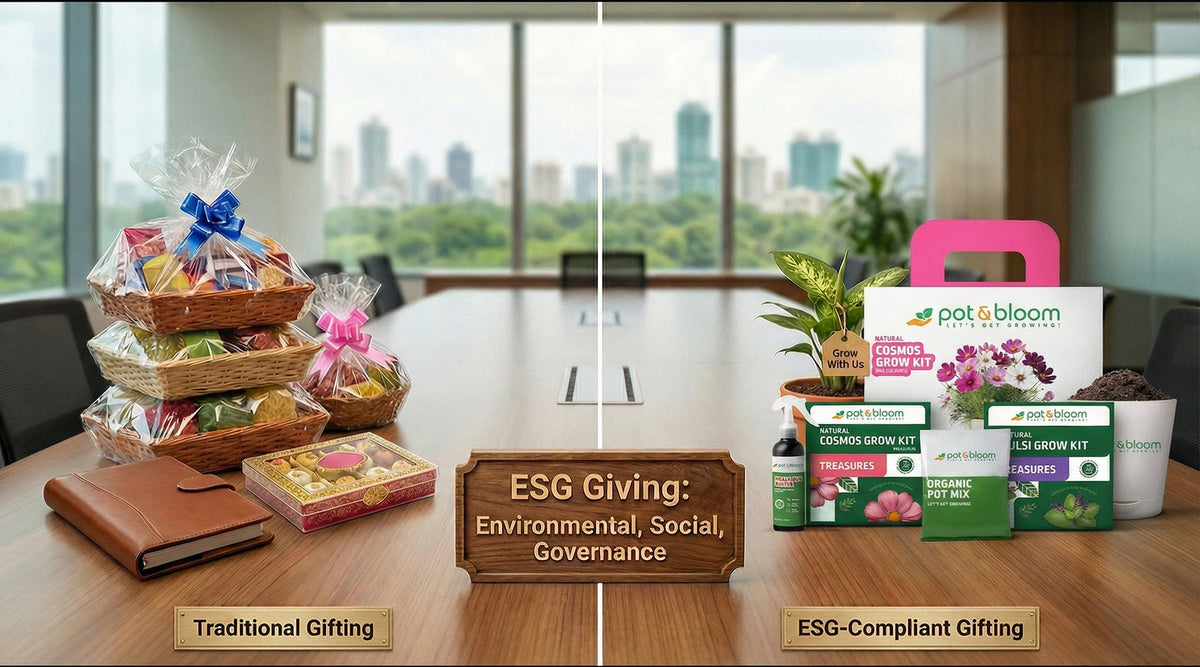
ESG-compliant alternative: Plant-based gifts like grow kits use organic materials and biodegradable packaging. The "waste" becomes compost. The gift itself helps clean the air.
Social: How Gifts Affect People
The "S" focuses on people. This includes your employees, suppliers, and communities. For gifting, consider:
- Fair labour practices in gift production
- Health and wellness benefits to recipients
- Inclusion and accessibility for all team members
- Community impact of your purchasing decisions
A gift should do good, not harm. Cheap gifts made in sweatshops create social problems even if they save money.
ESG-compliant approach: Choose gifts from companies that treat workers well. Select items that promote wellness, like plants that reduce stress and clean the air.
Governance: Doing Gifting Right
The "G" covers how you make decisions. Good governance in gifting means:
- Clear policies for what gifts are acceptable
- Transparent processes for vendor selection
- Budget accountability and spending controls
- Anti-corruption measures to avoid inappropriate gifting
Strong governance protects your company from legal risks. It also builds trust with stakeholders who want to see responsible practices.
ESG-compliant practice: Document your gifting policies. Choose vendors based on clear criteria, including sustainability standards.
Why Indian Companies Need ESG-Compliant Gifting Now
Indian businesses face unique pressures to improve their ESG performance. Here is why sustainable corporate gifting matters more than ever.
Regulatory Changes Are Coming
The Securities and Exchange Board of India (SEBI) now requires Business Responsibility and Sustainability Reporting (BRSR) for top listed companies. These requirements are expanding to more companies each year.
Your corporate gifting choices will be part of sustainability audits. Companies that cannot show responsible practices face reputation damage and potential penalties.
Investors Care About ESG Scores
Foreign institutional investors look closely at ESG performance. Many have policies against investing in companies with poor sustainability records. Your corporate gifting is part of the picture they evaluate.
Even small changes like switching to plastic-free gifts can improve your ESG metrics. These improvements attract better investment terms and partnerships.
Employees Expect It
Today's workforce wants to work for responsible companies. Studies show that employees are more engaged when their employer cares about the environment. Sustainable gifts signal that your company walks the talk.
When you give a Treasures Basil Kit instead of plastic trinkets, your team notices. It shows that your values extend to every decision, big and small.
Clients Make Decisions Based on ESG
Business buyers increasingly consider supplier ESG scores. A gift that creates waste could hurt your relationship. A sustainable gift strengthens it.
Many multinational companies now have supplier codes that include environmental standards. Your gift choices can affect whether you stay on their approved vendor list.
The Three Pillars of ESG-Compliant Corporate Gifts
Understanding ESG is one thing. Applying it to corporate gifting is another. Here is how to evaluate gifts through each lens.
Environmental Pillar: Questions to Ask
Before choosing any corporate gift, ask these questions:
About materials:
- Is this gift made from renewable resources?
- Can the packaging be recycled or composted?
- Are the materials sourced responsibly?
About production:
- How far did this gift travel to reach us?
- Was it made using clean energy?
- What is the carbon footprint of production?
About the end of life:
- What happens when the recipient is done with this gift?
- Will it become waste or create new value?
- Can it be reused, recycled, or composted?
Plant gifts score well on all these questions. The Italian Basil Kit uses organic materials, travels short distances, and creates no waste. The packaging becomes compost. The plant produces food.
Social Pillar: Questions to Ask
Think about the people affected by your gift choices:
For recipients:
- Will this gift improve their well-being?
- Is it accessible to people with different abilities?
- Does it respect diverse cultural backgrounds?
For workers:
- Were the people who made this gift paid fairly?
- Did they work in safe conditions?
- Does the company have good labour practices?
For communities:
- Does this gift support local businesses?
- Does it create positive community impact?
- Does it avoid harmful social effects?
When you choose locally-made grow kits, you support Indian workers and businesses. Recipients get health benefits from growing plants. Everyone wins.
Governance Pillar: Questions to Ask
Good governance protects everyone involved:
For your company:
- Is this gift within budget guidelines?
- Does it comply with anti-corruption policies?
- Is the purchase process transparent?
For recipients:
- Is the gift appropriate for the relationship?
- Does it avoid any appearance of impropriety?
- Can it be accepted without a conflict of interest?
For vendors:
- Does the supplier have good business practices?
- Are they financially stable and reliable?
- Do they have certifications or audits?
Plant gifts are universally appropriate. They do not raise questions about improper influence. They are modest in value but rich in meaning.

How to Measure ESG Impact of Your Corporate Gifts
You cannot improve what you cannot measure. Here is how to track the ESG impact of your corporate gifting program.
Environmental Metrics to Track
Waste Reduction:
- Kilograms of plastic eliminated
- Percentage of biodegradable packaging
- Items diverted from the landfill
Carbon Footprint:
- Shipping distance reduction
- Local vs. imported sourcing percentage
- Carbon offset, if applicable
Resource Use:
- Renewable materials percentage
- Water usage in production
- Energy consumption in manufacturing
Example calculation:
If you give 500 employees a traditional plastic gift hamper, you might generate:
- 2 kg plastic waste per gift = 1,000 kg total
- 15 km average shipping = 7,500 km total
Switching to Marigold Grow Kits instead:
- Zero plastic waste
- Local production = 90% less shipping distance
- Biodegradable packaging = zero landfill impact
Social Metrics to Track
Recipient Wellbeing:
- Employee satisfaction scores with gifts
- Health benefits reported (stress reduction, air quality)
- Gift utilisation rates (are people actually using them?)
Supplier Practices:
- Percentage of gifts from fair-trade or certified sources
- Worker welfare standards of vendors
- Local business support percentage
Community Impact:
- Jobs supported through purchases
- Local economic benefit
- Community programs supported by vendors
Governance Metrics to Track
Policy Compliance:
- Percentage of gifts within policy guidelines
- Approval process completion rate
- Budget adherence
Vendor Quality:
- Supplier audit scores
- Certification compliance
- On-time delivery and quality rates
Transparency:
- Documentation completeness
- Reporting accuracy
- Stakeholder communication quality
Creating Your ESG Gifting Scorecard (Sample)
Build a simple scorecard for each gift option. Rate each category from 1-5:
Gifts scoring 4.0 or higher should be your priority choices. This scorecard helps you make consistent, defensible decisions.
Share this policy with your team.
Best Practices for ESG-Compliant Corporate Gifting
Now, let us look at specific practices that will improve your gifting program.
Best Practice 1: Create a Sustainable Gifting Policy
Document your approach in writing. Include:
Gift Selection Criteria:
- Environmental standards required
- Social responsibility requirements
- Price range guidelines
- Approved gift categories
Vendor Requirements:
- Sustainability certifications preferred
- Labour practice standards
- Local business preference
- Quality standards
Process Rules:
- Approval workflow for purchases
- Budget limits by recipient type
- Documentation requirements
- Reporting obligations
in people who make gifting decisions. Review and update annually.
Best Practice 2: Choose Plastic-Free Gifts
Plastic is the enemy of ESG-compliant gifting. It:
- Takes hundreds of years to decompose
- Creates microplastics that harm ecosystems
- Signals outdated thinking to recipients
- Hurts your environmental scores
Plastic-free alternatives:
- Plant gifts in biodegradable pots
- Gifts wrapped in recycled paper
- Products in reusable containers
- Items with minimal or no packaging
The Treasures Cosmos Grow Kit comes in eco-friendly packaging. There is no plastic to throw away. Even the pot can go back to the earth.
Best Practice 3: Prioritise Local Sourcing
Every kilometre your gift travels adds to its carbon footprint. Local gifts:
- Create jobs in your community
- Reduce transportation emissions
- Support the Indian economy
- Arrive fresher and faster
When choosing between imported chocolates and locally-grown plant kits, the ESG choice is clear. Local production wins on environmental and social metrics.
Best Practice 4: Select Gifts with Lasting Value
Single-use gifts create waste quickly. Look for gifts that:
- Serve a purpose over time
- Can be reused or regifted appropriately
- Create ongoing enjoyment
- Grow in value rather than depreciate
A plant gift lasts for months or years. Each day it sits on someone's desk, it reminds them of your company. That is much better than a chocolate that is eaten and forgotten.
Best Practice 5: Include Educational Elements
Help recipients understand why you chose sustainable gifts. Include:
- Information about the environmental benefits
- Care instructions for plant gifts
- Your company's sustainability commitment
- Tips for recipients to be more sustainable
This education multiplies your impact. Recipients learn about sustainability. They share the message with others. Your gift becomes a conversation starter.
Best Practice 6: Track and Report Your Impact
What gets measured gets managed. Create systems to:
- Record every gift purchase
- Calculate environmental impact
- Survey recipients for feedback
- Report results to stakeholders
Include corporate gifting in your annual sustainability report. Show the numbers. Celebrate improvements. Set targets for next year.
Step-by-Step Guide to Implementing ESG Gifting
Ready to make the switch? Follow this implementation plan.
Step 1: Assess Your Current State (Week 1-2)
Start by understanding where you are today:
- What did you give last year?
- How much did you spend?
- Where did gifts come from?
- What packaging was used?
Calculate baseline impact:
- Estimate plastic waste created
- Calculate the approximate carbon footprint
- Identify non-compliant suppliers
- Note any policy gaps
Identify stakeholders:
- Who makes gifting decisions?
- Who approves budgets?
- Who receives gifts?
- Who cares about ESG outcomes?
Step 2: Set Goals and Policy (Week 3-4)
Define what success looks like:
Set SMART goals:
- Specific: "Eliminate plastic packaging from 100% of gifts"
- Measurable: "Reduce gifting carbon footprint by 50%"
- Achievable: "Source 80% of gifts locally"
- Relevant: "Improve employee satisfaction with gifts by 25%"
- Time-bound: "Achieve by Diwali 2025"
Draft your policy:
- Write clear guidelines
- Define approved gift categories
- Set budget parameters
- Establish approval processes
Get leadership buy-in:
- Present the business case
- Show ESG benefits
- Demonstrate cost neutrality or savings
- Secure budget approval
Step 3: Find ESG-Compliant Suppliers (Week 5-6)
Build your vendor list:
Research suppliers:
- Look for sustainability certifications
- Check labour practices
- Evaluate packaging standards
- Review customer testimonials
Request proposals:
- Ask for ESG credentials
- Request product samples
- Compare pricing for bulk orders
- Evaluate customisation options
Select partners:
- Score vendors on your criteria
- Check references
- Negotiate terms
- Finalize agreements
For plant-based corporate gifts, Pot and Bloom's corporate gifting program offers bulk ordering, custom branding, and sustainable packaging. They understand the needs of ESG-conscious companies.
Step 4: Pilot Your Program (Week 7-10)
Test before full rollout:
Choose a pilot group:
- Select one department or occasion
- Keep numbers manageable (50-100 gifts)
- Pick engaged stakeholders
Execute the pilot:
- Order sample gifts
- Distribute to the pilot group
- Gather feedback
- Document lessons learned
Refine your approach:
- Address any issues found
- Improve processes
- Update vendor selections if needed
- Finalise for broader rollout
Step 5: Full Implementation (Ongoing)
Scale your program:
Roll out company-wide:
- Train all gift purchasers
- Distribute policy documents
- Set up ordering processes
- Create approval workflows
Monitor performance:
- Track spending against the budget
- Measure environmental impact
- Survey recipient satisfaction
- Review vendor performance
Report and improve:
- Include in sustainability reporting
- Share wins internally
- Identify areas for improvement
- Set new goals annually
ESG-Compliant Gift Ideas for Every Occasion
Different occasions call for different gifts. Here are ESG-friendly options for common corporate gifting moments.
Employee Appreciation Gifts
Show your team you care with gifts that align with company values:
Budget-friendly (Under Rs. 500):
- Treasures Zinnia Grow Kit - Beautiful flowers anyone can grow
- Organic seed packets with custom cards
- Plantable paper products
Mid-range (Rs. 500-1000):
- Complete herb growing kits like Tulsi and Sage
- Indoor plant sets with care guides
- Sustainable desk accessories
Premium (Rs. 1000-2000):
- Curated garden starter sets
- Multiple grow kit bundles
- Plant care complete packages
Client Thank-You Gifts
Build relationships with gifts that reflect your values:
- Premium grow kits in elegant packaging
- Branded plant gifts with your logo
- Sustainable gift hampers
- Artisan eco-products
Festival Gifting (Diwali, New Year)
Celebrate responsibly during festive seasons:
- Festive plant gift sets
- Marigold Grow Kits are perfect for Diwali
- Sustainable hampers without plastic
- Eco-friendly home decor items
Conference and Event Giveaways
Stand out at events with memorable gifts:
- Branded seed packets
- Mini grow kits
- Sustainable notebooks and pens
- Eco-friendly tech accessories
Milestone Celebrations
Mark special moments with lasting gifts:
- Premium plant collections
- Garden starter sets
- Customised grow kits
- Living gift subscriptions
Common Challenges and How to Overcome Them
Switching to ESG-compliant gifting is not always easy. Here are solutions to common obstacles.
Challenge 1: Higher Per-Unit Costs
Some sustainable gifts cost more than cheap alternatives.
Solutions:
- Calculate the total cost of ownership, including waste disposal
- Show the long-term brand value of sustainable choices
- Negotiate bulk discounts with suppliers
- Reduce quantity but increase quality
Often, sustainable gifts cost the same or less when you account for all factors. A Rs. 480 grow kit provides months of value. A Rs. 500 chocolate box is gone in days.
Challenge 2: Limited Supplier Options
You might struggle to find ESG-compliant vendors.
Solutions:
- Start with a few trusted partners
- Ask existing vendors to improve practices
- Join industry groups sharing vendor lists
- Give new sustainable businesses a chance
The market is growing quickly. More ESG-friendly options appear every month. Early adopters help grow the ecosystem.
Challenge 3: Resistance to Change
Some people prefer traditional gifts.
Solutions:
- Educate about ESG benefits
- Share recipient feedback showing appreciation
- Start with pilot programs to build support
- Celebrate early wins publicly
Most resistance fades when people see sustainable gifts working. The Parsley Grow Kit recipient who harvests fresh herbs becomes your best advocate.
Challenge 4: Measurement Difficulties
ESG impact can be hard to quantify.
Solutions:
- Start with simple metrics you can track
- Use estimates where exact data is unavailable
- Improve measurement systems over time
- Focus on directional improvement
Do not let perfect measurement stop good action. Even rough estimates help guide better decisions.
Challenge 5: Scaling Programs
What works for 100 gifts might not work for 1000.
Solutions:
- Build relationships with scalable suppliers
- Automate ordering and tracking processes
- Create standard gift packages for efficiency
- Plan well ahead of peak gifting seasons
Large orders take time to fulfill. Start conversations with suppliers months before you need gifts.
The Future of ESG-Compliant Corporate Gifting
The trend towards sustainable gifting will only accelerate. Here is what to expect.
More Regulation
Government requirements for sustainability reporting will expand. More companies will need to justify their gifting choices. Having systems in place now gives you an advantage.
Higher Expectations
Employees and clients will increasingly expect sustainable choices. What is impressive today will be standard tomorrow. Stay ahead of expectations by continuously improving.
Better Options
The market for sustainable corporate gifts is growing fast. You will find more choices, better quality, and competitive pricing. Innovation will make ESG compliance easier.
Integration with Broader ESG
Corporate gifting will connect more tightly with the overall ESG strategy. Your gift choices will be part of comprehensive sustainability programs. Alignment across all activities will matter.
Take Action: Start Your ESG Gifting Journey Today
You now have everything you need to transform your corporate gifting. Here is how to begin.
This Week
- Review your current gifting practices
- Share this guide with decision-makers
- Discuss ESG goals for gifting
This Month
- Draft your sustainable gifting policy
- Research ESG-compliant suppliers
- Plan a pilot program
This Quarter
- Implement pilot gifting
- Gather feedback and refine
- Prepare for full rollout
This Year
- Complete full implementation
- Track and report impact
- Set goals for continuous improvement
Partner with Pot and Bloom for ESG-Compliant Gifting
Ready to make your corporate gifting more sustainable? Pot and Bloom offers plant-based gifts that check every ESG box.
Environmental benefits:
- Organic, locally-sourced materials
- Biodegradable packaging
- Zero plastic waste
- Carbon-absorbing living gifts
Social benefits:
- Indian-made products supporting local jobs
- Health and wellness for recipients
- Inclusive gifts everyone can enjoy
- Fair labour practices
Governance support:
- Transparent pricing
- Bulk ordering capabilities
- Custom branding options
- Documentation for compliance
Explore the corporate gifting options and request a quote for your organisation.
Your gifts say something about your company. Make sure they say the right thing.
Choose ESG-compliant. Choose sustainable. Choose gifts that grow.



Leave a comment
This site is protected by hCaptcha and the hCaptcha Privacy Policy and Terms of Service apply.