
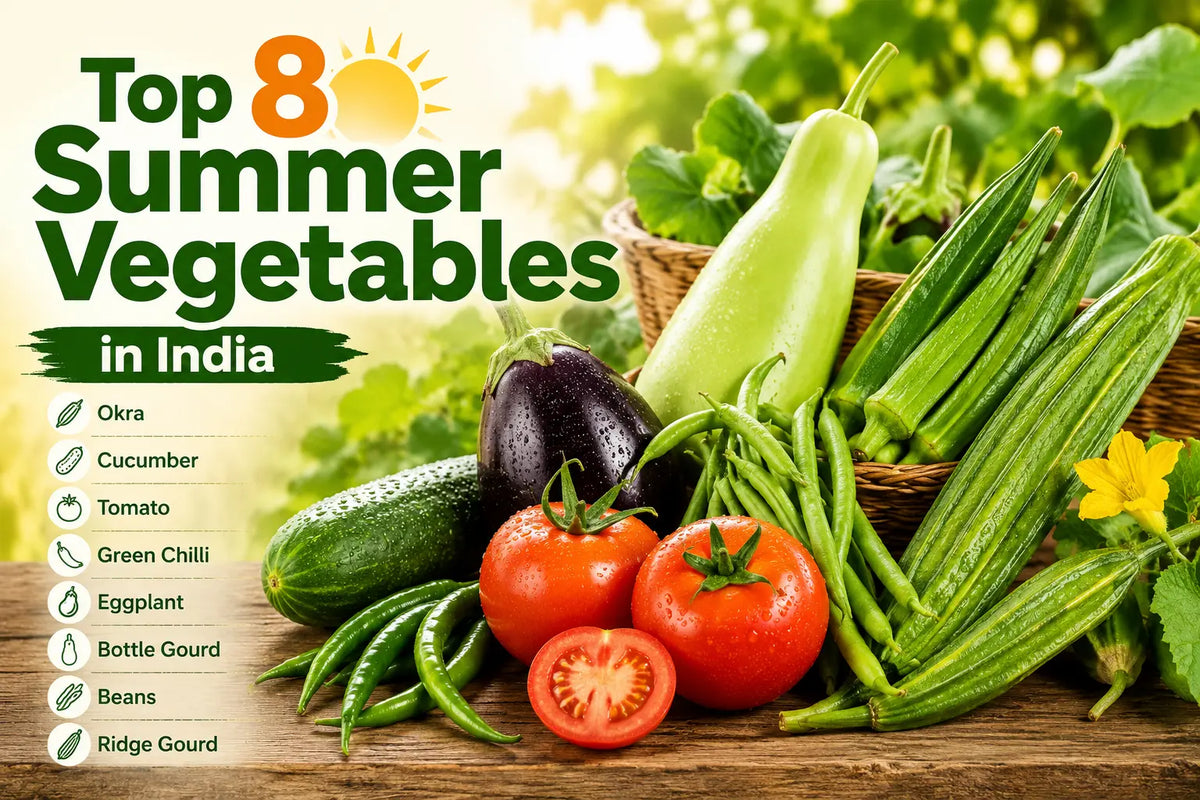
Top 8 Summer Vegetables in India: Best Vegetables for Summer Gardening
Summer is one of the best seasons for growing fresh vegetables at home, especially in India. With plenty of sunlight and warm temperatures, many vegetables grow quickly when given the right soil, water, and care. Whether you have a balcony, terrace, backyard, kitchen garden, or a few pots, you can grow several nutritious vegetables during the warmer months.
If you are looking for summer vegetables in India, choosing crops that can tolerate heat and grow well in warm conditions is important. Some vegetables can even be harvested within a few weeks, making them ideal for beginners.
In this guide, we have listed the top 8 summer vegetables that are suitable for Indian gardens. We will also cover their basic growing requirements, watering needs, harvesting time, and useful tips to help you create a productive summer garden.
What Are Summer Vegetables?
Summer vegetables are crops that perform well in warm temperatures and generally require plenty of sunlight for healthy growth. In India, vegetables such as okra, cucumber, tomato, chilli, beans, gourds, and eggplant are commonly grown during warmer months.
The exact planting time can vary depending on the region. Northern India, southern India, coastal areas, and hill regions can have different temperature and rainfall patterns, so gardeners should consider their local climate before planting.
For most vegetables for summer gardening, choose a sunny location, well-draining soil, good-quality compost, and a consistent watering routine.
Top 8 Summer Vegetables in India
1. Okra (Bhindi)
Okra, commonly called bhindi in India, is one of the easiest and most popular summer vegetables in India. It loves warm weather and plenty of sunlight, making it an excellent choice for home gardens.
Okra plants can be grown directly in garden soil or in large containers. They usually need around 6–8 hours of sunlight every day.
Growing tips:
- Use fertile and well-draining soil.
- Sow seeds directly into the soil.
- Provide plenty of sunlight.
- Water when the top layer of soil becomes dry.
- Harvest pods while they are young and tender.
Regular harvesting can encourage the plant to continue producing new pods. For container gardening, choose a reasonably deep pot so the roots have enough space.
Why grow bhindi?
It is relatively easy to grow, productive in warm weather, and suitable for both backyard gardens and terrace gardening.
2. Cucumber (Kheera)
Cucumber is another excellent choice for summer gardening. It grows rapidly in warm weather and produces refreshing fruits that are particularly popular during hot Indian summers.
Cucumber plants are vines, so they benefit from a trellis, net, or other support system. Vertical growing is especially useful if you have limited balcony or terrace space.
Growing tips:
- Plant in a sunny location.
- Use loose, nutrient-rich soil.
- Provide a trellis or support.
- Keep the soil consistently moist.
- Avoid letting water collect around the roots.
Cucumbers require regular watering, particularly during very hot weather. Mulching around the base of the plant can help retain moisture in the soil.
For gardeners with limited space, growing cucumber vertically can help make better use of available space.
3. Tomato
Tomatoes are among the most popular vegetables grown in Indian home gardens. Although tomatoes can be sensitive to extreme heat, they can perform well during suitable parts of the summer depending on the region and variety.
Tomato plants need sunlight, nutrient-rich soil, and regular watering. They can be grown in containers, grow bags, raised beds, or directly in garden soil.
Growing tips:
- Choose a sunny location.
- Use fertile soil mixed with compost.
- Provide support using stakes or cages.
- Water consistently.
- Avoid keeping the leaves constantly wet.
For container gardening, choose a pot that gives the plant enough room for its roots. Determinate or compact varieties can be particularly useful when space is limited.
Tomatoes also make a great choice for beginners because watching the fruits develop from flowers can be a rewarding gardening experience.
4. Green Chilli
Green chilli is a practical addition to any Indian kitchen garden. It does well in warm conditions and doesn't require a huge amount of space, making it one of the best vegetables for summer gardening in containers.
A chilli plant can be grown in a pot on a balcony, terrace, or windowside area as long as it receives adequate sunlight.
Growing tips:
- Use a pot with good drainage.
- Provide several hours of sunlight.
- Use fertile soil with organic compost.
- Water regularly but avoid overwatering.
- Pick chillies regularly to encourage production.
Chilli plants can continue producing for a considerable period when they receive proper care.
If you are starting a small kitchen garden, green chilli is a good crop to consider because even a few plants can provide a regular supply for everyday cooking.
5. Eggplant (Baingan)
Eggplant, also known as brinjal or baingan, is another warm-season vegetable that can be grown in many parts of India.
The plant prefers warm temperatures and plenty of sunlight. Depending on the variety, eggplants can produce fruits in different shapes, sizes, and colours.
Growing tips:
- Use fertile, well-drained soil.
- Give plants plenty of sunlight.
- Provide adequate space between plants.
- Water consistently.
- Support plants if they become heavy with fruit.
Eggplant can be grown in containers as well as garden beds. If growing it in pots, choose a container large enough to support the plant's root system and mature size.
Regularly check the plant for pests and remove damaged leaves or fruits when necessary.
6. Bottle Gourd (Lauki)
Bottle gourd is an excellent summer crop for gardeners who have enough vertical space. It is a vigorous climbing plant that can spread considerably if left unsupported.
Bottle gourd vines grow well in warm conditions and can produce large fruits when provided with proper support, sunlight, water, and nutrients.
Growing tips:
- Choose a sunny area.
- Use nutrient-rich soil.
- Provide a strong trellis or support structure.
- Water consistently.
- Allow enough room for the vine to spread.
Because bottle gourd is a climbing vegetable, it can be particularly useful for terrace gardens where vertical structures are available.
One important consideration is the strength of the support. Mature vines and fruits can become heavy, so the trellis should be sturdy.
7. Beans
Beans are another useful option for a summer kitchen garden. Depending on the variety and local conditions, gardeners can grow bush beans or climbing varieties.
Climbing beans can be trained onto a trellis, making them suitable for gardeners who want to maximize vertical space.
Growing tips:
- Choose a location with good sunlight.
- Use loose and fertile soil.
- Provide support for climbing varieties.
- Keep soil moisture consistent.
- Harvest beans while the pods are young and tender.
Beans can be especially satisfying to grow because harvesting can begin relatively soon after the plants become established.
If you have a small garden, vertical bean varieties can help you make better use of limited floor space.
8. Ridge Gourd (Turai)
Ridge gourd, or turai, is a popular warm-season vegetable in India. Like bottle gourd, it grows as a vine and performs best when given a strong support structure.
The plant needs sunlight, water, and sufficient room for its vines to develop. It can be grown in a backyard garden or on a terrace with a suitable trellis.
Growing tips:
- Use fertile, well-draining soil.
- Give the plant plenty of sunlight.
- Install a strong trellis.
- Water regularly.
- Harvest fruits when they are young and tender.
Growing ridge gourd vertically can also help reduce the amount of ground space required, making it a useful option for terrace gardeners.
Tips for Growing Vegetables During Summer
Growing vegetables during the Indian summer can be highly rewarding, but hot temperatures can also create challenges. Follow these simple gardening practices to keep your plants healthy.
1. Choose the Right Location
Most summer vegetables require plenty of sunlight. Select an area that receives several hours of direct sunlight every day.
However, during periods of extreme heat, some plants may benefit from protection from harsh afternoon sunlight, particularly in very hot regions.
2. Use Good-Quality Soil
Healthy soil is the foundation of a productive garden. Use a mixture that drains well while retaining enough moisture for plant growth.
Adding mature compost or well-decomposed organic matter can improve soil structure and provide nutrients.
3. Water at the Right Time
Summer plants need regular moisture, but overwatering can be just as harmful as underwatering.
Early morning is generally a convenient time to water because it allows plants to access moisture before the heat of the day increases evaporation.
During very hot weather, check the soil regularly rather than following a rigid watering schedule.
4. Add Mulch
Mulching is useful during hot weather because it can help reduce moisture loss and keep the soil surface cooler.
You can use suitable organic materials such as dry leaves, straw, or other garden mulch around plants. Keep mulch slightly away from the main stem to reduce the risk of moisture-related problems.
5. Use Containers Carefully
If you are growing vegetables for summer gardening on a balcony or terrace, container size matters.
Small containers can dry out quickly during hot weather. Choose an appropriate pot or grow bag for each vegetable and ensure that drainage holes are not blocked.
6. Watch for Pests
Warm weather can encourage different garden pests. Check the underside of leaves, new shoots, flowers, and fruits regularly.
Early detection makes pest management much easier. Remove heavily damaged leaves when appropriate and use gardening practices suited to the specific pest.
Best Summer Vegetables for Balcony Gardening
You don't need a large backyard to grow vegetables. Several summer vegetables in India can be grown successfully in containers.
For a small balcony or terrace, consider:
- Green chilli
- Okra
- Tomato
- Eggplant
- Cucumber
- Beans
Climbing vegetables such as cucumber and beans can be trained vertically with suitable support. This allows gardeners to use wall or railing-adjacent space more efficiently.
For beginners, starting with chilli, okra, or tomato can be a simple way to learn the basics of container gardening.
Why Grow Summer Vegetables at Home?
Growing your own vegetables has several benefits beyond simply producing food.
First, it can help you understand where your food comes from and how plants grow. A home garden can also make fresh produce readily available for everyday cooking.
Gardening can be a rewarding hobby for families, children, and beginners. It provides an opportunity to spend time outdoors, learn about plants, and create a greener living environment.
A small garden can also make use of otherwise unused spaces such as balconies, terraces, windowsides, and patios.
Final Thoughts
Growing vegetables at home becomes much easier when you select crops suited to the season and local climate. Okra, cucumber, tomato, green chilli, eggplant, bottle gourd, beans, and ridge gourd are some of the popular options to consider for warm-weather gardening in India.
If you are new to gardening, start with just two or three crops rather than trying to grow everything at once. Give your plants adequate sunlight, nutritious soil, regular moisture, and enough room to grow.
Whether you have a large backyard or a small balcony, there are plenty of vegetables for summer gardening that can help you build a productive home garden.
Start small, observe your plants regularly, and learn what works best in your local climate. With consistent care, your summer garden can provide fresh and rewarding harvests throughout the growing season.
FAQ
1. Which are the best summer vegetables in India?
Some of the best summer vegetables in India include okra (bhindi), cucumber, tomato, green chilli, eggplant (baingan), bottle gourd (lauki), beans, and ridge gourd (turai). These vegetables generally perform well in warm conditions when provided with suitable sunlight, soil, water, and care.
2. Which vegetables are best for summer gardening?
For summer gardening, beginner-friendly options include okra, green chilli, tomato, cucumber, beans, and eggplant. If you have vertical space and a strong support structure, bottle gourd and ridge gourd are also good choices.
3. Can I grow summer vegetables in pots?
Yes, many summer vegetables can be grown in pots or grow bags. Green chilli, okra, tomato, eggplant, cucumber, and beans are suitable options for container gardening. Choose an appropriately sized container with good drainage.
4. Which summer vegetables grow quickly?
Some vegetables can provide relatively quick harvests under suitable growing conditions. Okra, cucumber, beans, and green chilli can be good choices for gardeners who want to see results sooner. Actual harvest time depends on the variety, weather, soil, and care.
5. How much sunlight do summer vegetables need?
Most summer vegetables prefer several hours of sunlight each day, with many performing best in full sun. However, during periods of extreme heat, some plants may need protection from intense afternoon sunlight.
6. How often should I water summer vegetables?
Watering frequency depends on the temperature, soil type, container size, plant maturity, and local weather. Check the soil regularly and water when the top layer begins to dry. Avoid keeping the soil continuously waterlogged.
7. Which summer vegetables are suitable for a balcony garden?
Green chilli, okra, tomato, eggplant, cucumber, and beans can be suitable for balcony gardening. Compact varieties are particularly useful where space is limited. Cucumber and climbing beans can also be trained vertically with proper support.
8. What soil is best for growing summer vegetables?
Most summer vegetables prefer fertile, well-draining soil that can hold adequate moisture without becoming waterlogged. Adding mature compost or other suitable organic matter can help improve soil quality and support healthy plant growth.
9. Can I grow vegetables during summer on a terrace?
Yes. Terrace gardening can be a great way to grow summer vegetables in containers or grow bags. Make sure plants receive adequate sunlight, containers have proper drainage, and climbing vegetables have strong support structures.
10. Which vegetables are easiest for beginners to grow in summer?
Okra, green chilli, beans, cucumber, and tomato can be good starting choices for beginners. Start with a few plants, learn their watering and sunlight requirements, and gradually expand your summer garden.
11. What are the best vegetables for summer gardening in small spaces?
For small gardens, balconies, and terraces, consider green chilli, okra, tomato, beans, and compact eggplant varieties. Vertical crops such as cucumber and beans can also help maximize limited gardening space.
12. How can I protect summer vegetables from extreme heat?
During very hot periods, maintain consistent soil moisture, use mulch to reduce moisture loss, and provide temporary shade when necessary. Container plants may need more frequent monitoring because their soil can dry out faster than garden beds.

Leave a comment
This site is protected by hCaptcha and the hCaptcha Privacy Policy and Terms of Service apply.